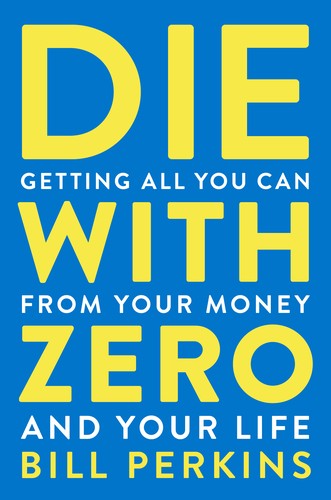
Most of us are taught one rule about money: earn as much as you can and save as much as you can, for later. Die With Zero, the bestselling book by Bill Perkins, asks the uncomfortable follow-up question: later when?
Perkins’ answer is that money has no value on its own. It is only worth the experiences it turns into — the trips, the time with your kids, the risks you take, the help you give. Every dollar you die with is a dollar of life you worked for and never used. In his words, it’s work you did for free.
What it is not
“Die with zero” does not mean spending recklessly, ignoring retirement, or leaving your family with nothing. It is a planning idea, not a party plan. You still protect yourself against running out — the book is full of tools for that — and you still give generously. The difference is timing: spending and giving at the points in your life when the money does the most good.
The core ideas
- Your life is the sum of your experiences. Optimise for memorable experiences, not for your net worth.
- Experiences pay memory dividends. A great experience keeps paying you back every time you remember it, so the earlier you have it the more it pays.
- Every experience has a window. Some things are only possible at certain ages and levels of health. Wait too long and the door closes.
- Know your peak. There is a point to stop growing your wealth and start drawing it down — and it’s tied to your age and health, not to a magic number.
- Give while you’re alive. Money given to your kids at 30 changes more than an inheritance at 60.
- Don’t live on autopilot. Deliberate choices beat default ones, in spending and in life.
Who it’s for
The idea lands hardest with people who are good at saving: the ones who already have enough, and keep stacking more because it feels safe. If you have ever postponed a trip, a sabbatical or time with family “until things settle down”, this book is written for you.
That is exactly what the Die With Zero podcast explores. Host Austin Allison sits down with people who made real choices about their money and their time — and talks honestly about what it cost and what it gave them.